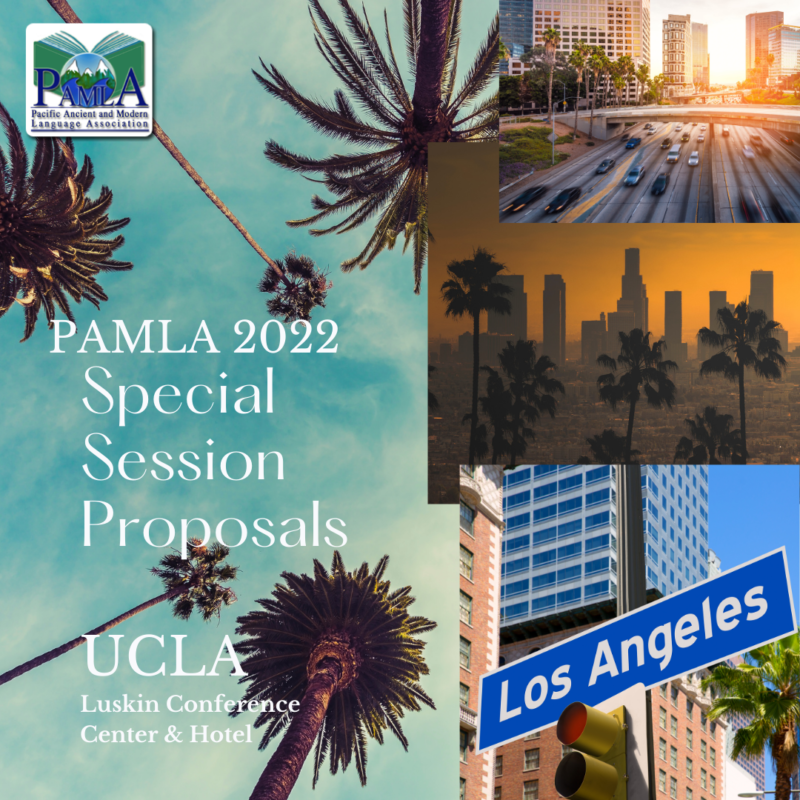
Regardless, here is a call for Special Session Proposals for the 2022 Conference of PAMLA, the Pacific Ancient and Modern Language Association! The conference will take place at UCLA, November 11–13 (in person).
A good ol' Weblog for musings about language, literature, music, art, food, etc.
Showing posts with label literature. Show all posts
2022-02-07
Call for Special Sessions: PAMLA 2022 Conference
Apparently it tires my brain so much to come up with post ideas, that I'm resorting to publicizing conference CFPs on my blog...
2017-06-10
A Long Road to Publishing a Peer-Reviewed Journal Article
On 5 June 2017, I delivered my first peer-reviewed journal article into this world. (I'm not counting my 2006 article about English acquisition, sorry.) Though much less painful than a childbirth, the process took a hell of a lot longer than bringing a human baby into this world.
If you're one of those people who can publish articles while in a Ph.D. program; can balance writing and teaching skillfully; mostly get "publish with minor revisions" as a submission response; or can publish more than one article a year, what I write below may come as a shock to you. Or appalling. I don't care. I'm extremely thankful for this publication, and I know I couldn't have done it without help from the people around me every step of the way.
This post is for anyone out there who has ever felt like it's damn near impossible to get a publication out. I am here to tell you: It can be done; it just might take a really, really long time.
If you're one of those people who can publish articles while in a Ph.D. program; can balance writing and teaching skillfully; mostly get "publish with minor revisions" as a submission response; or can publish more than one article a year, what I write below may come as a shock to you. Or appalling. I don't care. I'm extremely thankful for this publication, and I know I couldn't have done it without help from the people around me every step of the way.
This post is for anyone out there who has ever felt like it's damn near impossible to get a publication out. I am here to tell you: It can be done; it just might take a really, really long time.
2016-07-27
Drinking Coffee
At the 2007 CCCC I went to the exhibitors' hall on the last day and scored myself some free books. One of them was a short story collection by ZZ Packer titled Drinking Coffee Elsewhere, which I finished reading...finally, just a few days ago.
The collection is wonderful, and I hope you get to read it one day if you haven't already. Please don't think that it'll take you nine years to finish it—once I got started, I was done with it in just a few days.
The titular story is about a woman who enters an Ivy League school as a freshman and learns—and is made to reaffirm—all the injustices tied to being black, female, and queer (though she doesn't identify herself in all of those categories).
The collection is wonderful, and I hope you get to read it one day if you haven't already. Please don't think that it'll take you nine years to finish it—once I got started, I was done with it in just a few days.
The titular story is about a woman who enters an Ivy League school as a freshman and learns—and is made to reaffirm—all the injustices tied to being black, female, and queer (though she doesn't identify herself in all of those categories).
2016-04-04
So Long, March.
A number of posts will, I hope, come out of the Spring Recess 2016 that was the end of March–beginning of April—but first I want to post a poem that I was reminded of this past week, the poem that essentially changed my life.
On My First Son by Ben Jonson
Farewell, thou child of my right hand, and joy;
My sin was too much hope of thee, lov'd boy.
Seven years tho' wert lent to me, and I thee pay,
Exacted by thy fate, on the just day.
O, could I lose all father now! For why
Will man lament the state he should envy?
To have so soon 'scap'd world's and flesh's rage,
And if no other misery, yet age?
Rest in soft peace, and, ask'd, say, "Here doth lie
Ben Jonson his best piece of poetry."
For whose sake henceforth all his vows be such,
As what he loves may never like too much.
The last week and a half have been thought-provoking and mind-blowing...or, maybe it's one because it's the other......
On My First Son by Ben Jonson
Farewell, thou child of my right hand, and joy;
My sin was too much hope of thee, lov'd boy.
Seven years tho' wert lent to me, and I thee pay,
Exacted by thy fate, on the just day.
O, could I lose all father now! For why
Will man lament the state he should envy?
To have so soon 'scap'd world's and flesh's rage,
And if no other misery, yet age?
Rest in soft peace, and, ask'd, say, "Here doth lie
Ben Jonson his best piece of poetry."
For whose sake henceforth all his vows be such,
As what he loves may never like too much.
The last week and a half have been thought-provoking and mind-blowing...or, maybe it's one because it's the other......
2015-04-16
Philosopher's Walk
On a drizzly evening this past week my family and I went out to explore a dusky Kyoto. My brother led the way toward the Philosopher's Walk, which we took toward Ginkaku-ji until we stopped from lack of light and too-muddy paths. Along the way we saw some cherry trees and duck couples. All was well in the world.
Right now before me lies a different kind of Philosopher's Walk—one paved with deadline after deadline. Buuuut, last weekend I got through one major one, and I'm feeling pretty good about the fact that I can chillax for the next couple of days.
So today and tomorrow I am getting myself organized and preparing my lesson plans. Having students—like, warm bodies in the room—is an amazing feeling...I just hope that I didn't piss them off to the point of preventing them from registering. Actually...now that I think about it, that's entirely possible...
Here's to a steadily warming Spring Semester!
Right now before me lies a different kind of Philosopher's Walk—one paved with deadline after deadline. Buuuut, last weekend I got through one major one, and I'm feeling pretty good about the fact that I can chillax for the next couple of days.
So today and tomorrow I am getting myself organized and preparing my lesson plans. Having students—like, warm bodies in the room—is an amazing feeling...I just hope that I didn't piss them off to the point of preventing them from registering. Actually...now that I think about it, that's entirely possible...
Here's to a steadily warming Spring Semester!
2015-02-11
伊藤比呂美に人生相談をしたら
A. 干渉するのは当たり前です。それが母親の仕事ですから。
確かに30にもなったら(いや、その前からでも)「もういい加減にしてよっ!」と思うかもしれません。でも、娘がいくつになっても、母親にとって娘は娘です。そして、その干渉は「心配」や「愛情」と言う名の物にすり替えられ、そしていつの間にかありがたく思わなければならない物になるのです。
でも、不思議な事に、本当にそれがありがたい物になる日が来るのです。(このケースが大半を占める。そうでない場合もある。)それは、いつか親がいなくなった日。その時、その「干渉」と言う愛情がなくなってしまって、安心よりも先に、寂しさが訪れるのです。
親を変える事はできません。或る意味、自分も変える事だってできないのですから。そして、親に何かを期待してはいけません。自分が何をしたいか、どう生きたいか。それだけです。そして、いつかやって来てしまうその日まで、できるだけ後悔しない様に生きるだけです。
[してません、伊藤比呂美に、人生相談は。でも、もししたら、こんな感じの答えが帰って来るかもしれない。帰ってこなくても、まぁ、こんな風に生きてみようじゃないか。]
2014-10-20
私が感じた事。
俳句・・・と言う物に、最近興味を持ち始めた。
英語で言う "haiku" は昔から好きになれなかったが、日本語で書かれた俳句を実際に読んでみると、これはなかなか面白い。今の所、何が何だか本当に分からないが、ほんの少しずつ勉強して行きたい。
と考えていたら、知り合いが『ランドセル俳人の五・七・五』と言う本を貸してくれた。幼い男の子が俳句に興味を持ち、登校拒否の間に詠んだ俳句を集めた本だった。それを読んだ私が何を感じたか。
それは、「教育と言う制度を信用するな」と言う事だった。国が決める教材。教師と親の対立。子供達の間での関係。何を望んで学校に行くのか。何が目的で塾に通うのか。何を期待して進学するのか。
「学」とは何なのか。人間の中に何を埋め込み、何を引き出すのか。幸せになる事。相手を理解する事。健康な体を保つ事。他者の命を奪わない事。
自分が感じた事を17文字に納め、違う人と分かち合う。それが俳句、また「学」なのかもしれない。
英語で言う "haiku" は昔から好きになれなかったが、日本語で書かれた俳句を実際に読んでみると、これはなかなか面白い。今の所、何が何だか本当に分からないが、ほんの少しずつ勉強して行きたい。
と考えていたら、知り合いが『ランドセル俳人の五・七・五』と言う本を貸してくれた。幼い男の子が俳句に興味を持ち、登校拒否の間に詠んだ俳句を集めた本だった。それを読んだ私が何を感じたか。
それは、「教育と言う制度を信用するな」と言う事だった。国が決める教材。教師と親の対立。子供達の間での関係。何を望んで学校に行くのか。何が目的で塾に通うのか。何を期待して進学するのか。
「学」とは何なのか。人間の中に何を埋め込み、何を引き出すのか。幸せになる事。相手を理解する事。健康な体を保つ事。他者の命を奪わない事。
自分が感じた事を17文字に納め、違う人と分かち合う。それが俳句、また「学」なのかもしれない。
2014-10-17
Book Renewal Fetish
This morning I went to the city library to return some books and check out some more. But when I got there, the sign on the door said...CLOSED. Apparently I'd missed the memo that today was the day for the library to sort out its materials. ::sigh::
Throughout my Ph.D. program I constantly had books upon books checked out of the library. During coursework it was for writing my seminar papers, which meant that at the end of finals week I could return most of them and bring down my checked-out books count to a single digit. While writing my dissertation, I constantly had books on hand I needed to read, more books for which to procrastinate on my writing, more books to fill up my desk space (or two). I'd read through them and take notes, or I'd read parts of them, or I'd read none of them and just gaze longingly at their spines—with a promise that I'd read them after I wrapped up whatever draft I was working on.
What I couldn't get enough of was renewing books. All I had to do was log into my account online, click a couple of buttons, and voilà! I could keep all of those books sitting on my desk for another six months! (Was it? I forget.) It was like proof that I was working: Look at all these books I have checked out! I must be making progress on my dissertation!
Yeah, right. When I moved to Japan I didn't bring that many books, knowing my stay here was temporary. And now I have this lovely office with (count 'em) EIGHT floor-to-ceiling bookshelves, and I only have a handful of books sitting on them. Nowadays I check out just as many (or more) books than I did as a grad student, but I actually read them all, and I read them a lot faster.
I'm taking up a "no renewal" policy, kids. No more clicking online buttons for me. I check out the books I need, take down the notes that are useful, and return those puppies to their homes. I feel a lot more efficient, and I feel better (in my own little world) that if there are others who need the books, then they don't have to wait a long time to get to them. It's like a strange form of "recycle, reduce, reuse"—it's up to you! Even if my bookshelves do feel a little lonely.
Throughout my Ph.D. program I constantly had books upon books checked out of the library. During coursework it was for writing my seminar papers, which meant that at the end of finals week I could return most of them and bring down my checked-out books count to a single digit. While writing my dissertation, I constantly had books on hand I needed to read, more books for which to procrastinate on my writing, more books to fill up my desk space (or two). I'd read through them and take notes, or I'd read parts of them, or I'd read none of them and just gaze longingly at their spines—with a promise that I'd read them after I wrapped up whatever draft I was working on.
What I couldn't get enough of was renewing books. All I had to do was log into my account online, click a couple of buttons, and voilà! I could keep all of those books sitting on my desk for another six months! (Was it? I forget.) It was like proof that I was working: Look at all these books I have checked out! I must be making progress on my dissertation!
Yeah, right. When I moved to Japan I didn't bring that many books, knowing my stay here was temporary. And now I have this lovely office with (count 'em) EIGHT floor-to-ceiling bookshelves, and I only have a handful of books sitting on them. Nowadays I check out just as many (or more) books than I did as a grad student, but I actually read them all, and I read them a lot faster.
I'm taking up a "no renewal" policy, kids. No more clicking online buttons for me. I check out the books I need, take down the notes that are useful, and return those puppies to their homes. I feel a lot more efficient, and I feel better (in my own little world) that if there are others who need the books, then they don't have to wait a long time to get to them. It's like a strange form of "recycle, reduce, reuse"—it's up to you! Even if my bookshelves do feel a little lonely.
2014-10-01
To Apply, or Not to Apply
It's a funny thing trying to decide whether or not to apply to a particular job post. Last year it was like, "Anything with the word 'Japanese' in it, I'm applying!" but this year it's like, "OK OK, no need to be so voracious here." Like, like...
There are jobs that I clearly can't apply to (not my field, not my time period, etc.), and then there are jobs where I'm like...is this a job I want over the one I have now? And would I want to apply (ever) to jobs in particular geographic locations, when I know that my heart belongs in sunny California?
And what of the question of research vs. teaching? Why the valorization of research institutions over teaching institutions, when I'd much rather be in the classroom teaching than in my office writing? Or am I spoiled even to have such a preference?
2014-09-29
上野千鶴子と林真理子と・・・
先日は遥洋子の『東大で上野千鶴子にケンカを学ぶ』も読んだ。著者の視点から書く「学者の世界」の説明は面白かったし、そして上野千鶴子(何故いつもフルネームなのだろう・・・)が著者に対してとる態度の説明も読んでいてとても嬉しかった。
私は上野千鶴子にも林真理子にも会った事がないし、会うより本を読む方が好むと思うけど、上野千鶴子は私が聞いている程悪い人ではないと思う。遥洋子にとっての上野千鶴子は、私にとっての大学院の恩師に似ている。きつい人かもしれないし、暖かい人では無いかもしれない。気難しかったり、「それはないんじゃないのっ?!」と思わせる様な事をしたり言ったりするかもしれない。でも、彼女は彼女の考え方を持っていて、それを主張できるだけの地位に行き着いたんだ。彼女だったら、私が彼女の本と林真理子の本を一緒に読む事を批判しないと思う。
Labels:
gender,
hayashi mariko,
japan,
life,
literature,
ueno chizuko
2014-09-05
駅弁 ~ Station Meal-in-a-Box ~
I recently read a book about ekiben (駅弁, "railway boxed meals", according to Wikipedia—I'd always associated bento with lunch, but I guess you can have it for dinner, too). I was standing in the food studies section at the library and thought I'd pick something up.
The book was titled Ekiben Monogatari (『駅弁物語』, Stories of the Railway Boxed Meal) and published in 1979. Its author, Uriu Tadao (瓜生忠夫), was born in Taiwan in 1915 and worked later as a media critic while also writing about ekiben.
I admit I love ekiben—I get it every chance I get (unless I'm overladen with luggage), mostly when I take the shinkansen. I got one last at the beginning of August (pictured—though I threw away the wrapping and don't remember much about it, except it had something to do with being a light summer meal)!
The book was unexpectedly a great read, despite its moments of sexism. The concurrent rise of the ekiben along with that of the Japanese railway system, the relationship between ekiben and imperialism as the military purchased ekiben from vendors in exchange for supplying them with white rice (hot commodity during wartime), changing nature of trains (e.g., windows that passengers can't open) under modernization and the development of express trains and what it did to the economic structure of platform sales of ekiben... All really interesting and new to me.
In the book Uriu gives a recipe for making "Torimeshi" (「とりめし」), an ekiben he likes from Takasaki Station (高崎駅) in Gunma Prefecture (群馬県) in the Kantō region. Apparently he got the recipe from the (then?) owner of Budō-ya (葡萄屋) in Tokyo, a restaurant that specializes in chicken dishes and yakitori...and what do you know, they're still in business. I'm including a rough summary of the recipe below, just so I won't forget it.
The Meat Half of the Torimeshi Topping
400g ground chicken
8 T sake
4 T sugar
3 T soy sauce
Put meat into a pot, mix the sauce and pour over meat. Cook without stirring. When done, serve over half the rice in a bowl. (If you want to reheat, add sake or water.)
I love recipes like that. Now for
The Egg Half of the Torimeshi Topping
2 eggs
1 T sugar
Salt
Combine ingredients and pour into a pan with no oil. When it begins to cook, mix vigorously with chopsticks. Serve over the other half of the rice in a bowl.
He says torimeshi goes well with a simple chicken soup, made with ginger, garlic, salt, pepper...with a little bit of soy sauce, green onions, and some mitsuba (an herb, kind of like parsley or cilantro). Mmmmmm.
The book was titled Ekiben Monogatari (『駅弁物語』, Stories of the Railway Boxed Meal) and published in 1979. Its author, Uriu Tadao (瓜生忠夫), was born in Taiwan in 1915 and worked later as a media critic while also writing about ekiben.
I admit I love ekiben—I get it every chance I get (unless I'm overladen with luggage), mostly when I take the shinkansen. I got one last at the beginning of August (pictured—though I threw away the wrapping and don't remember much about it, except it had something to do with being a light summer meal)!
The book was unexpectedly a great read, despite its moments of sexism. The concurrent rise of the ekiben along with that of the Japanese railway system, the relationship between ekiben and imperialism as the military purchased ekiben from vendors in exchange for supplying them with white rice (hot commodity during wartime), changing nature of trains (e.g., windows that passengers can't open) under modernization and the development of express trains and what it did to the economic structure of platform sales of ekiben... All really interesting and new to me.
In the book Uriu gives a recipe for making "Torimeshi" (「とりめし」), an ekiben he likes from Takasaki Station (高崎駅) in Gunma Prefecture (群馬県) in the Kantō region. Apparently he got the recipe from the (then?) owner of Budō-ya (葡萄屋) in Tokyo, a restaurant that specializes in chicken dishes and yakitori...and what do you know, they're still in business. I'm including a rough summary of the recipe below, just so I won't forget it.
The Meat Half of the Torimeshi Topping
400g ground chicken
8 T sake
4 T sugar
3 T soy sauce
Put meat into a pot, mix the sauce and pour over meat. Cook without stirring. When done, serve over half the rice in a bowl. (If you want to reheat, add sake or water.)
I love recipes like that. Now for
The Egg Half of the Torimeshi Topping
2 eggs
1 T sugar
Salt
Combine ingredients and pour into a pan with no oil. When it begins to cook, mix vigorously with chopsticks. Serve over the other half of the rice in a bowl.
He says torimeshi goes well with a simple chicken soup, made with ginger, garlic, salt, pepper...with a little bit of soy sauce, green onions, and some mitsuba (an herb, kind of like parsley or cilantro). Mmmmmm.
2014-08-20
お金をかけずにステキになる方法 其ノ二:自信を持とう!
やっと読みました!サンディエゴの本屋さんでは見つからなかった斎藤芳乃さんの本を、先日購入。やっぱり読んでよかったです。
This is the "self-help" book that I'd been reading. A lesson on how to have self-confidence...
「不適切な人から自分を守る」・・・これを読んで、自分の中でモヤモヤしていた雲が少しずつ消えて行った様な気がします。相手がどんなに「大切」、「必要」だと思っても、私の事を尊重してくれない人とは、一緒にはいられません。勿論、妥協するべき時もあります。でも、相手の考え方に支配されたくはありません。
以前、「君が嫉妬するのは僕の所為じゃなくて、君に自信が無いからだろ」と言われた事があります。確かにそうかもしれない。もっと私が、「自分は素敵な人間だから、彼が他の人に目を向ける筈は無い」と思える位自信があればよかったのかもしれません。でも今考えて見ると、少し違う様な気がします。私が「しないで」と言う事を、私の自信の無さと言い切ってし続ける人は、私には「不適切」だったんだと思います。
あ〜、この本読んでよかった。なんか色々スッキリした〜・・・
This is the "self-help" book that I'd been reading. A lesson on how to have self-confidence...
「不適切な人から自分を守る」・・・これを読んで、自分の中でモヤモヤしていた雲が少しずつ消えて行った様な気がします。相手がどんなに「大切」、「必要」だと思っても、私の事を尊重してくれない人とは、一緒にはいられません。勿論、妥協するべき時もあります。でも、相手の考え方に支配されたくはありません。
以前、「君が嫉妬するのは僕の所為じゃなくて、君に自信が無いからだろ」と言われた事があります。確かにそうかもしれない。もっと私が、「自分は素敵な人間だから、彼が他の人に目を向ける筈は無い」と思える位自信があればよかったのかもしれません。でも今考えて見ると、少し違う様な気がします。私が「しないで」と言う事を、私の自信の無さと言い切ってし続ける人は、私には「不適切」だったんだと思います。
あ〜、この本読んでよかった。なんか色々スッキリした〜・・・
2014-07-06
I Don't Recommend This Book, but
In the third year of my Ph.D. program I stopped buying books. I'd imagine I had a really good rationale behind that decision, but I just can't remember it at this very moment.
Anyway, while ABD I mainly read books that I borrowed from either the library or people I knew. (Or I made my eyeballs bleed by reading electronic versions. ::sigh::) As evidenced by my post about Jeanette Winterson's Lighthousekeeping, this "no book buying" trend continues.
Of course, summertime means family time, and family time means my sister lending me books. And we all know my sister only reads books with covers that are mostly pink.
Her latest loan is Is Everyone Hanging Out Without Me? (And Other Concerns) by Mindy Kaling. I admit, I've never seen a single episode of the U.S. version of The Office. (Chillax—I do own the British version.) I've also never seen a single episode of The Mindy Project. I have, however, read Kaling's essay "Types of Women in Romantic Comedies Who Are Not Real". I find many things in her book to be funny; I just don't care for her writing. Maybe I would like the jokes on her show, just not how they're told.
In other words, I wouldn't necessarily recommend this book to people (unless, of course, their sisters were lending it to them). But there were a few bits in it that really struck me.
Anyway, while ABD I mainly read books that I borrowed from either the library or people I knew. (Or I made my eyeballs bleed by reading electronic versions. ::sigh::) As evidenced by my post about Jeanette Winterson's Lighthousekeeping, this "no book buying" trend continues.
Of course, summertime means family time, and family time means my sister lending me books. And we all know my sister only reads books with covers that are mostly pink.
Her latest loan is Is Everyone Hanging Out Without Me? (And Other Concerns) by Mindy Kaling. I admit, I've never seen a single episode of the U.S. version of The Office. (Chillax—I do own the British version.) I've also never seen a single episode of The Mindy Project. I have, however, read Kaling's essay "Types of Women in Romantic Comedies Who Are Not Real". I find many things in her book to be funny; I just don't care for her writing. Maybe I would like the jokes on her show, just not how they're told.
In other words, I wouldn't necessarily recommend this book to people (unless, of course, their sisters were lending it to them). But there were a few bits in it that really struck me.
- Stress is not a legitimate topic of conversation. Kaling describes this sentiment as having come from growing up a child of immigrant professionals, where her parents (doctor and architect) worked and commuted long hours while making sure their kids had at least one parent at home at all times. Sure, there are many things about class and race to dissect here, but I kind of agree with her sentiment: we're all busy in our own ways, and we're all stressed out to a certain extent at different times. And maybe that's why you don't get to sit there complaining like your stress somehow excuses you from doing your part so that other people can get through their day too.
- It's nice when a guy gets a little jealous now and then. OK, the heteronormative assumption is a bit disturbing in this book, but I'm going to ride its wave: I would freak out if my partner were as jealous as I am, because I am an insanely jealous person. But maybe that's why I kind of appreciate it when my partner does get jealous—I think like, "Hey, maybe he likes me and thinks I'm cool enough that he'd be upset if someone else made a pass at me". What a confidence booster that can be.
- Adults should date adults. I'm paraphrasing here, because what she (really) implies is "Women should date men (not boys)". But whatever. I do, nonetheless, appreciate the things she says about what men do, which include: knowing what they want, making concrete plans, making reservations, going in for a kiss without giving "some long preamble about how they're thinking of kissing you". Essentially she gives points to people who aren't afraid of commitment—not necessarily to a romantic relationship, but to life in general: where they live and what they do to make a living. After all, if those are the types of commitments one person in the relationship is making, then it would probably make for a good balance for the other person to be making similar commitments as well.
2014-06-01
Lighthousekeeping — Jeanette Winterson
A friend of a friend let me borrow a copy of Jeanette Winterson's Lighthousekeeping. This was only my second Winterson novel, the first one being Written on the Body that my ex-partner got me while we were together. I really liked Written on the Body, so I jumped at the chance to read Lighthousekeeping.
What a bad idea. This is not the novel to read when your heart, mind, and body are exhausted and worn to their cores. Parts of the book left me a broken mess on the floor.
--
You must never doubt the one you love.
But they might not be telling you the truth.
Never mind that. You tell them the truth.
What do you mean?
You can't be another person's honesty, child, but you can be your own.
So what should I say?
When?
When I love someone?
You should say it. (85)
What should I do about the wild and the tame? The wild heart that wants to be free, and the tame heart that wants to come home. I want to be held. I don't want you to come too close. I want you to scoop me up and bring me home at nights. I don't want to tell you where I am. I want to keep a place among the rocks where no one can find me. I want to be with you. (198–199)
What a bad idea. This is not the novel to read when your heart, mind, and body are exhausted and worn to their cores. Parts of the book left me a broken mess on the floor.
--
You must never doubt the one you love.
But they might not be telling you the truth.
Never mind that. You tell them the truth.
What do you mean?
You can't be another person's honesty, child, but you can be your own.
So what should I say?
When?
When I love someone?
You should say it. (85)
What should I do about the wild and the tame? The wild heart that wants to be free, and the tame heart that wants to come home. I want to be held. I don't want you to come too close. I want you to scoop me up and bring me home at nights. I don't want to tell you where I am. I want to keep a place among the rocks where no one can find me. I want to be with you. (198–199)
2014-05-30
The Month of Craziness (and PAMLA Update)
If I thought April was a rough month, May was even more so. It's not over yet, though, which means there's a bit more bracing to be done...
Despite the insanity, there's still business to take care of: The CFP for PAMLA's Asian Literature session is still open, and I must advertise. Because the deadline is...Saturday.
--
CFP: Asian Literature (Standing Session) at PAMLA 2014 (Oct. 31–Nov. 2) in Riverside, CA
Papers are sought for additional Asian Literature standing sessions at the 112th Annual Conference of the Pacific Ancient and Modern Language Association, to take place from October 31 to November 2 at the Riverside Convention Center in Riverside, CA.
The session is open to papers that address a wide range of issues, including race, gender, sexuality, class, history, language, peace, war, etc.—you name it—in Asian cultural productions. It aims to explore how these issues arise in texts from various regions of Asia while questioning divisions such as Northeast, East, Southeast, and South. Papers from fields such as anthropology, art, history, ethnic studies, music, and sociology are also welcome.
The special theme of this year's conference is "Familiar Spirits". Papers for the Asian Literature session are welcome to (though certainly not required to) explore the ideas of magic, conjuring, spirits, hauntings, Spiritualism, and manifestations, as well as to treat the familiar, familial, and the commonplace in relation to the paranormal, strange, and uncanny.
For more information and to submit proposals, please visit the proposal submission page of PAMLA 2014 at http://www.pamla.org/2014/proposals. The extended deadline for submissions is Saturday, May 31, 2014. Questions can be directed to the presiding officer, whose email address is listed on the Session Topics page at http://www.pamla.org/2014/topic-areas.
Happy proposing!
Despite the insanity, there's still business to take care of: The CFP for PAMLA's Asian Literature session is still open, and I must advertise. Because the deadline is...Saturday.
--
CFP: Asian Literature (Standing Session) at PAMLA 2014 (Oct. 31–Nov. 2) in Riverside, CA
Papers are sought for additional Asian Literature standing sessions at the 112th Annual Conference of the Pacific Ancient and Modern Language Association, to take place from October 31 to November 2 at the Riverside Convention Center in Riverside, CA.
The session is open to papers that address a wide range of issues, including race, gender, sexuality, class, history, language, peace, war, etc.—you name it—in Asian cultural productions. It aims to explore how these issues arise in texts from various regions of Asia while questioning divisions such as Northeast, East, Southeast, and South. Papers from fields such as anthropology, art, history, ethnic studies, music, and sociology are also welcome.
The special theme of this year's conference is "Familiar Spirits". Papers for the Asian Literature session are welcome to (though certainly not required to) explore the ideas of magic, conjuring, spirits, hauntings, Spiritualism, and manifestations, as well as to treat the familiar, familial, and the commonplace in relation to the paranormal, strange, and uncanny.
For more information and to submit proposals, please visit the proposal submission page of PAMLA 2014 at http://www.pamla.org/2014/proposals. The extended deadline for submissions is Saturday, May 31, 2014. Questions can be directed to the presiding officer, whose email address is listed on the Session Topics page at http://www.pamla.org/2014/topic-areas.
Happy proposing!
2014-04-29
CFP: Asian Literature at PAMLA 2014
[And now...a bit of shameless PA...!]
CFP: Asian Literature (Standing Session) at PAMLA 2014 (Oct. 31–Nov. 2) in Riverside, CA
Papers are sought for the Asian Literature standing session at the 112th Annual Conference of the Pacific Ancient and Modern Language Association, to take place from October 31 to November 2 at the Riverside Convention Center in Riverside, CA.
The session is open to papers that address a wide range of issues, including race, gender, sexuality, class, history, language, peace, war, etc.—you name it—in Asian cultural productions. It aims to explore how these issues arise in texts from various regions of Asia while questioning divisions such as Northeast, East, Southeast, and South. Papers from fields such as anthropology, art, history, ethnic studies, film studies, music, and sociology are also welcome. [Yes, the presiding officer likes lists.]
The special theme of this year's conference is "Familiar Spirits". Papers for the Asian Literature session are welcome to (though certainly not required to) explore the ideas of magic, conjuring, spirits, hauntings, Spiritualism, and manifestations, as well as to treat the familiar, familial, and the commonplace in relation to the paranormal, strange, and uncanny. [OK, that list is not the presiding officer's doing.]
For more information and to submit proposals, please visit the proposal submission page of PAMLA 2014 at http://www.pamla.org/2014/proposals. Deadline for submissions is Thursday, May 15, 2014. Questions can be directed to the presiding officer, whose email address is listed on the Session Topics page at http://www.pamla.org/2014/topic-areas.
Happy proposing!
CFP: Asian Literature (Standing Session) at PAMLA 2014 (Oct. 31–Nov. 2) in Riverside, CA
Papers are sought for the Asian Literature standing session at the 112th Annual Conference of the Pacific Ancient and Modern Language Association, to take place from October 31 to November 2 at the Riverside Convention Center in Riverside, CA.
The session is open to papers that address a wide range of issues, including race, gender, sexuality, class, history, language, peace, war, etc.—you name it—in Asian cultural productions. It aims to explore how these issues arise in texts from various regions of Asia while questioning divisions such as Northeast, East, Southeast, and South. Papers from fields such as anthropology, art, history, ethnic studies, film studies, music, and sociology are also welcome. [Yes, the presiding officer likes lists.]
The special theme of this year's conference is "Familiar Spirits". Papers for the Asian Literature session are welcome to (though certainly not required to) explore the ideas of magic, conjuring, spirits, hauntings, Spiritualism, and manifestations, as well as to treat the familiar, familial, and the commonplace in relation to the paranormal, strange, and uncanny. [OK, that list is not the presiding officer's doing.]
For more information and to submit proposals, please visit the proposal submission page of PAMLA 2014 at http://www.pamla.org/2014/proposals. Deadline for submissions is Thursday, May 15, 2014. Questions can be directed to the presiding officer, whose email address is listed on the Session Topics page at http://www.pamla.org/2014/topic-areas.
Happy proposing!
2013-11-26
Mindset, or, Continuing Education on the Cheap
While at my parents' house for New Year's in January I borrowed from them a book by psychologist Carol Dweck titled Mindset (which, it turns out, has an accompanying Web site). I finally finished it a couple of days ago (shut up), and from the book I learned two things: 1) we can benefit by adopting a "growth mindset", and 2) we can profit by writing a popular book (more than by writing an academic book).
Although that second lesson wasn't new (I've never seen any earnings from my dad's mathematical theory books), I did find Dweck's ideas about the two mindsets insightful. (I'm late to the party because the book was published in 2006, but) the book argues that there are two mindsets: fixed and growth. Fixed mindset thinking assumes our abilities are fixed, and that the way things are are the way things will be; and growth mindset thinking assumes that abilities can grow with effort, and that things can change.
Those ideas sound like "duh" ideas, but it helps to have them articulated—so please borrow the book from your local library if you want to learn more.
So in an effort to engage in more growth mindset thinking, I'm taking seriously the idea of continuing education. No, not "Continuing Education" like the stuff they try to sell you in online ads; I'm talking about the simple act of "continuing (your) education". And while I lied about getting a second Ph.D. in my previous post (surprise), I do like to learn—but I'm also hella cheap. So I decided to figure out how to continue my education for free (or, at least, for very little money)—without compromising on quality. Here's what I've got:
And of course, anything you can read for free—newspapers, magazines, in print, online, whatever you can get your hands on—should be food for thought. In which case, the only thing I have to be careful about is overeating.
What am I missing? There must be some magical site that aggregates all sorts of inexpensive educational Web sites and tools. Any tips? Also, what to do with all this awesome continuing education we can get for free/at a low(ish) cost? No one's going to get me to write a term paper for some class I'm not getting credit for, but having periodic output required makes the input so much more worthwhile...
Although that second lesson wasn't new (I've never seen any earnings from my dad's mathematical theory books), I did find Dweck's ideas about the two mindsets insightful. (I'm late to the party because the book was published in 2006, but) the book argues that there are two mindsets: fixed and growth. Fixed mindset thinking assumes our abilities are fixed, and that the way things are are the way things will be; and growth mindset thinking assumes that abilities can grow with effort, and that things can change.
Those ideas sound like "duh" ideas, but it helps to have them articulated—so please borrow the book from your local library if you want to learn more.
So in an effort to engage in more growth mindset thinking, I'm taking seriously the idea of continuing education. No, not "Continuing Education" like the stuff they try to sell you in online ads; I'm talking about the simple act of "continuing (your) education". And while I lied about getting a second Ph.D. in my previous post (surprise), I do like to learn—but I'm also hella cheap. So I decided to figure out how to continue my education for free (or, at least, for very little money)—without compromising on quality. Here's what I've got:
- iTunes U: Hands down, my go-to place for free edumacation. I can download audio and video files on all sorts of topics, and I can go through them while I'm making the bed or cooking dinner. And since I access the courses through the iTunes interface, the system doesn't present a learning curve. Score.
- Podcasts: This is how I'm learning Dutch. Unfortunately I haven't actually learned any Dutch yet (not even how to order a drink), but that's OK—most bartenders in Holland speak English anyway.
- YouTube: What's not to love (except for the ads you can't skip)? I go here to learn how to cook things by watching some lady wearing a sweater with a plunging neckline. But with its subscription system and suggested videos and channels, YouTube is great for learning via entertaining videos. Seriously—subscribe to YouTube channels, people. (And I don't say this because a relative works there...)
- TED: Ah, the home of inspiring talks. I mean, who can resist a site that tags videos based on just how jaw-dropping/courageous/ingenious they are? Plus the site design is gorgeous.
- edX: Yes, it's a MOOC-provider. But at least it's not-for-profit, and I can't criticize MOOCs unless I've taken one (though taking the demo course and learning how essays are "graded" made me want to throw up). But I'm signed up for a jazz appreciation class in winter, and I must say: I'm pretty jazzed.
- Webinars: Companies often offer free Webinars, which are awesome when I just want to hear people talk about topics that they know a lot about who also give out free PowerPoints. I've attended a Webinar on financial education through UC Retirements and another on long-distance relationships through SARC. I'm also eyeing future Webinars through Charles Schwab...I'm such a greedy learner.
- COLLEGE: I admit, I've never seen Animal House (and my undergrad advisor told me I hadn't lived), but institutions of higher education are good places to, well, continue education. And since there are a myriad options for how to take classes—for a degree or for a certificate, full-time or part-time—places like university extensions and community colleges make it easy to take courses one at a time. (The price, however, is becoming increasingly prohibitive—which is a whole 'nother conversation.)
And of course, anything you can read for free—newspapers, magazines, in print, online, whatever you can get your hands on—should be food for thought. In which case, the only thing I have to be careful about is overeating.
What am I missing? There must be some magical site that aggregates all sorts of inexpensive educational Web sites and tools. Any tips? Also, what to do with all this awesome continuing education we can get for free/at a low(ish) cost? No one's going to get me to write a term paper for some class I'm not getting credit for, but having periodic output required makes the input so much more worthwhile...
2013-10-17
The Reader / 愛を読む人
Truth be told, I read it to rid myself of a memory. And as I was reading it, I realized that that was what the book is about, too—not just about coming to terms with the past, but about how to deal with the desire to forget and let go, and the simultaneous inability (and maybe deep down, the defiance not) to do so.
The past is past, I know. It's behind us, it's gone, it's not coming back. But it's always...happened. The fact that the past "was" (and will always continue to "was") is undeniable. We can't change it, we can't wish it away. We may not think the way we did then, we may not love the people we did then. But the fact that we did remains. Maybe the question, then, is how to live our present and future...
2013-08-07
日本での発見 / Discoveries in Japan #41: 発表 / Presentation
I don't necessarily have that problem, but since it was the only book available, I thought it couldn't hurt to read it on the train. (Plus I have presentation on Friday! Perfect timing!)
Much of the book discussed ways to get your brain to start processing (and then overcoming) your past traumas that made you dislike talking in front of people, and then to visualize yourself enjoying and succeeding at it instead. And while I may not necessarily lie there chanting "I am awesome, I am awesome" before I go to sleep at night (well, I may, but it won't be because I'm afraid of talking in front of people), there were three tips I took away from the book.
- Visualize yourself in a positive manner—things about yourself that you dislike, think of their alternatives that you do like, and then visualize yourself as having those qualities instead. And your shortcomings? Try to spin as them as positives!
- Express thanks in having the opportunity to present—and for having an audience to listen to you. Out loud, at the beginning.
- Imagine your head and shoulders as being stuck to a hanger—and when you turn your body, turn the whole hanger, not just the hook (i.e., your head). You look more...calm. (And sexy. (And like you have a stiff back.))
Those are probably not things that the writer intended for me to take away, but that's OK, she's not here. And while these tips may not help me with Friday's presentation, I feel more positive just having read the book!
しかし、日本の本はやたらと余白が多い。本を一冊、森下へ行って帰ってくるまでの間に読み終わってしまった。まるで小学生時代のティーンズ・ハートみたいだ。これでは資源の無駄遣いではなかろうか・・・
2013-07-24
日本での発見 / Discoveries in Japan #37: 向田邦子 / Mukōda Kuniko
文庫本は電車の中で手軽に読めるからいいんだけど、向田邦子の本は必ずと言っていい程涙で顔がボロボロになるから、公共の場で読むにはちょいと恥ずかしい。今日も帰りの電車の中で目真っ赤にしながら『あ・うん』読んでたし・・・
Mukōda passed away far too young, but even still she in her works (whether essay, novel, or screenplay) pens incisive and sensitive portrayals of a wide range of characters—men and women, young and old. And there's such an honesty and clarity there, something that makes you recognize yourself in those characters, that you can't help but look to the pages for answers to things that you've been struggling with...
さて、『あ・うん』も終わったし、次は中里恒子を読む事にしよう。こっちも電車で読んだらヤバいのだろうか・・・
Subscribe to:
Posts (Atom)


